7 Top Tips To Calculate and Maximize Event ROI
Event creators are business people too. The first goal of every event is to ensure smooth sailing of the proceedings, such that each and every attendee gets the full extent of the kind of content they signed up for. However, many event planners focus so much on that, that they forget another important aspect of the entire event process: generating revenue and maximize event ROI.
This ensures planners don’t break the bank and have a good return for their investment: in both time and money. You can also start smiling to the bank after every event with these tips.
TL;DR
Planning a successful event? Here are seven key strategies to ensure maximum impact and ROI:
- Impressions Matter: Ensure your attendees leave with a positive impression by delivering a memorable farewell speech, having staff see guests out, and providing souvenirs.
- Location: Choose a venue centrally located and easily accessible, considering layout, amenities, ambience, capacity, and cost.
- Target Audience: Research and understand your audience to optimize marketing efforts and achieve a higher ROI.
- Speaker Selection: Choose speakers based on their expertise, relevance to your topic, energy, passion, and influence to maximize engagement and reach.
- Sharing Content: Create shareable content to extend event impact beyond the venue, utilizing social media, eBooks, SlideShare, and more.
- Audience Engagement: Prioritize audience engagement throughout your event with Q&A sessions, polls, interactive technology, exhibitions, games, and team-building activities.
- Data Analytics: Collect and analyze attendee data to understand demographics, preferences, and effective marketing channels for future events.
What Is Event ROI?
Event ROI (Return on Investment) measures the value your event brings, going beyond just the money made. Event ROI is a key metric that tells you how successful and impactful your event is. This value includes both direct benefits like sales and sponsorships, and indirect perks such as brand recognition and lead generation.
Tracking event ROI means keeping an eye on specific event engagement metrics and ensuring you have solid data collection methods. Align your event goals with measurable outcomes, like how many leads you generated, if your target audience showed up, and how effective your marketing was in driving event registrations.
Analyzing event ROI helps you make smart decisions about where to allocate resources, optimize event content and strategies, and ensure you’re constantly improving. It also helps justify your budget and get buy-in from leadership by clearly showing how events contribute to bigger business goals, like boosting brand awareness, launching new products, or driving sales.
Understanding and measuring event ROI gives you a full picture of your event’s success, guiding your future planning and making sure each event delivers maximum value.
How To Maximize Event ROI
We will guide you to seven proven steps to maximize your event ROI.
1. Impressions Matter
So much focus has been given to first impressions these days that final impressions seem not to be considered at all. Especially if you are running a branding/ product-based event, you want your attendees to have a positive mindset about you as they leave. This, you can achieve by:
- Delivering a short, rousing and sweet goodbye speech
- Having members of staff on hand to see guests out
- Doling out souvenirs, etc.

2. Location, Location, Location!
No matter how great your event is supposed to be, or how amazing the content/ speakers are, location could be a huge dealbreaker for you.
Choose your location such that it is at the hub of your attendee list. That way, you make the event an easy point of access to anyone and everyone who wants to attend. Some of the things to consider when choosing location for events are:
- Layout
- Accessibility
- Services and amenities – parking lots, convenience centers, etc.
- Ambience
- Capacity and
- Cost

3. Research Your Audience
A good percentage of the event planning budget will go into marketing and the creation of awareness. The effectiveness of your marketing campaign, in this regard, will be based on how well you are able to target your audience. That said, you cannot target an audience you do not know. Thus, take the time out to create a profile of those you are planning for. That way, you know just who to target and who to leave out – focusing your marketing spends better for an improved ROI model.

4. Speaker Assignment
We would most likely attend an event on tech disruption if Elon Musk was giving the speech instead of Warren Buffet. This is not because Warren is a poor personality, but we don’t see him as an authority in that field. This tells you that you speakers should not only be chosen for their name, but what they stand for in the fields and niches you will be addressing.
Likewise, you get to leverage on the speaker’s following to come through for you when you choose them right. In other words, you get the word out to a larger set of people than you would have been able to reach on your own. To recap, only choose a speaker for your intended topic based on:
- The kind of energy they can bring to the room
- Their passion
- Their area of expertise (don’t confuse this with passion) and
- Influence – ability to drive engagement and infuse motivation.

5. Sharing is Caring
The doors of revenue generation are not closed on the event the moment it ends. Likewise, the ROI boosting moves are not restricted to those in the room alone. Getting the juicy parts of your event to go far and wide for more impressions is what shareable content does for you.
For every event, make sure you create and curate content that can be shared across your networks. Carry the present audience along too: for example, they can join in on the online conversation by following a trend, using a hashtag to share their experiences, etc.
For information-based events, you could ask your speakers to write an eBook, package their presentations for SlideShare or leverage any other form of media to get the word out.

6. Audience Engagement
It is not a proper event if the audience have not been properly engaged. Audience engagement is not what you do as an afterthought anymore. It is one thing that should always be at the back of your mind with every step of the program. That is how you can ensure attendees are kept in tune with speakers, speeches, presentations and other proceedings throughout the course of events.
You can kickstart this section by easing the attendees into the engagement profile with QnA sessions, polls and welcoming opinionated members of the audience on board. Event apps and event technology will also help you step up the game to a whole new level. Finally, consider exhibitions, booths, games, fun events, group/ team building activities and more.
7. Data
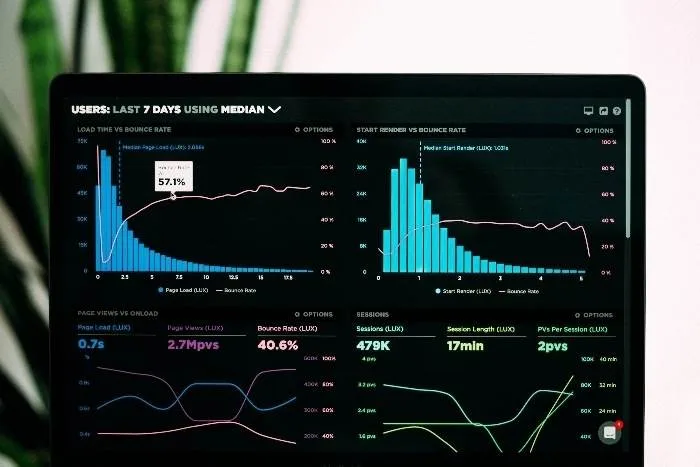
Data is king, and in more ways than one. Never organize an event if you don’t have a way of collecting relevant user data from it. The data you collect from attendees will keep you informed on such things as:
- The age distribution of your audience
- Societal class
- Average level of income
- Average corporate positions
- Location; and where they have come from
- What marketing channels they connect with, and much more.
The above data will help you draw up a more informed target audience profile for subsequent events. It also gives you an insight into what, and who, to focus on for better brand results.
How To Measure Event ROI?
Measuring Event ROI (Return on Investment) is crucial for understanding the success and impact of your events. Here are several ways to calculate it, each tailored to different objectives and metrics.
1. Standard ROI Formula
The most basic way to measure event ROI is by using the standard ROI formula:
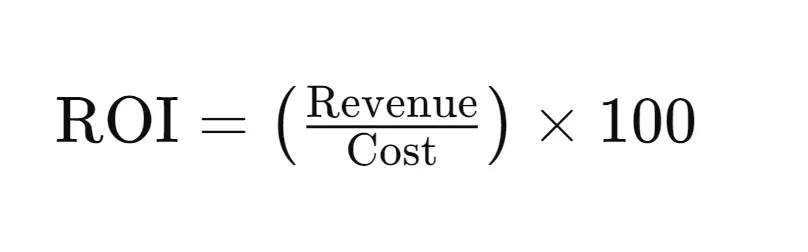
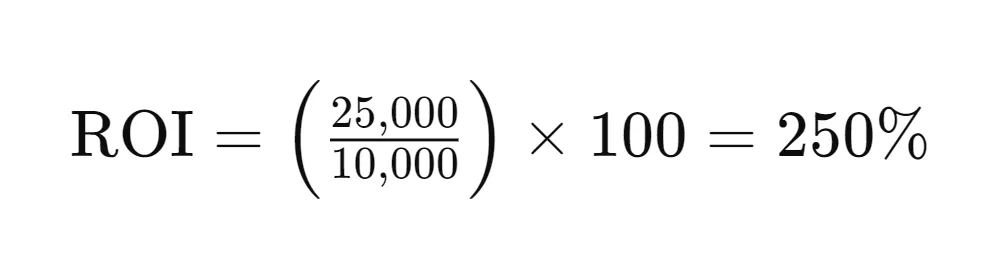
This formula gives you a percentage that represents the return on your investment. However, this only works well for straightforward revenue and cost calculations. For example, if you spent $10,000 on an event and generated $25,000 in revenue, your ROI would be:
2. Net Profit Formula
For a more detailed financial perspective, you can calculate the net profit first and then use it to determine ROI. Here’s the step-by-step process:
1. Calculate Net Profit:
-

For instance, if your event generated $30,000 in revenue and the total cost was $10,000, the net profit would be:

2. Calculate ROI
-
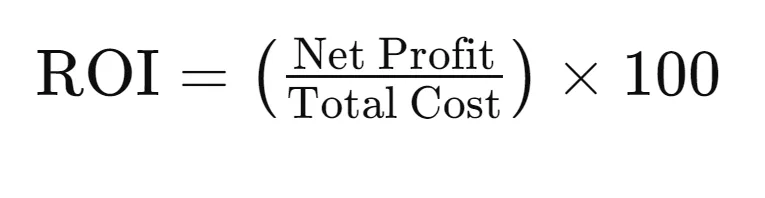
Using the net profit example:

3. Non-Financial ROI
Events often have objectives beyond direct financial gain, such as brand awareness, lead generation, or networking. To measure ROI in these cases, you need to establish specific KPIs (Key Performance Indicators):
1. Set Objectives:
- Brand Awareness: Track metrics like social media mentions, press coverage, or website traffic.
- Lead Generation: Count the number of leads or potential clients gathered during the event.
- Networking: Measure the number of meaningful business connections made.
-
2. Assign Value to Metrics:
-
For instance, if you estimate that each new lead is worth $200 to your business, and you generated 50 leads, the value of those leads is:

3. Calculate Non-Financial ROI
-
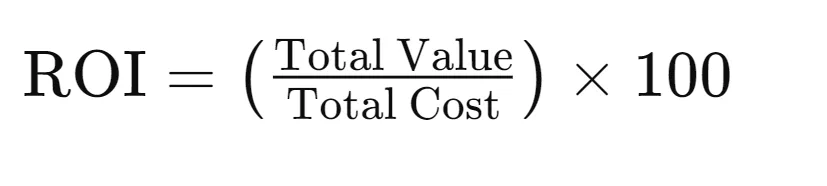
If your event cost $5,000 and the total value of leads and other non-financial metrics is

4. Comprehensive ROI Calculation
To get a holistic view, combine both financial and non-financial metrics by
1. Sum All Benefits:
- Total Revenue from sales
- Value of leads generated
- Value of brand exposure (e.g., advertising equivalent value)
2. Calculate Total Value:
- If total revenue is $20,000, lead value is $10,000, and brand exposure value is $5,000, the total value is:

-
3. Use the Comprehensive ROI Formula
-

If the total cost is $10,000:

By systematically calculating and analyzing event ROI, you can ensure your events are not only impactful but also a smart investment for your business.
Final Thought
Understanding, calculating, and maximizing ROI (Return on Investment) is beyond important for you as an event planner. It helps you measure the success of your events in concrete terms, like how much revenue you brought in, how many leads you generated, or how much your brand visibility improved.
Proving to stakeholders and leadership that your events are worth every penny of the budget is a must. When you can clearly show the financial and strategic value, it becomes much easier to secure the funding you need.
Knowing your ROI also lets you fine-tune your strategies. By analyzing what worked and what didn’t, you can make smarter decisions for future events, ensuring each one is better than the last. It helps you allocate resources more effectively, so you’re putting your time, money, and effort where they’ll make the biggest impact. Plus, regularly reviewing ROI fosters a mindset of continuous improvement. You’ll learn something new from each event, making every subsequent one more effective and impactful.
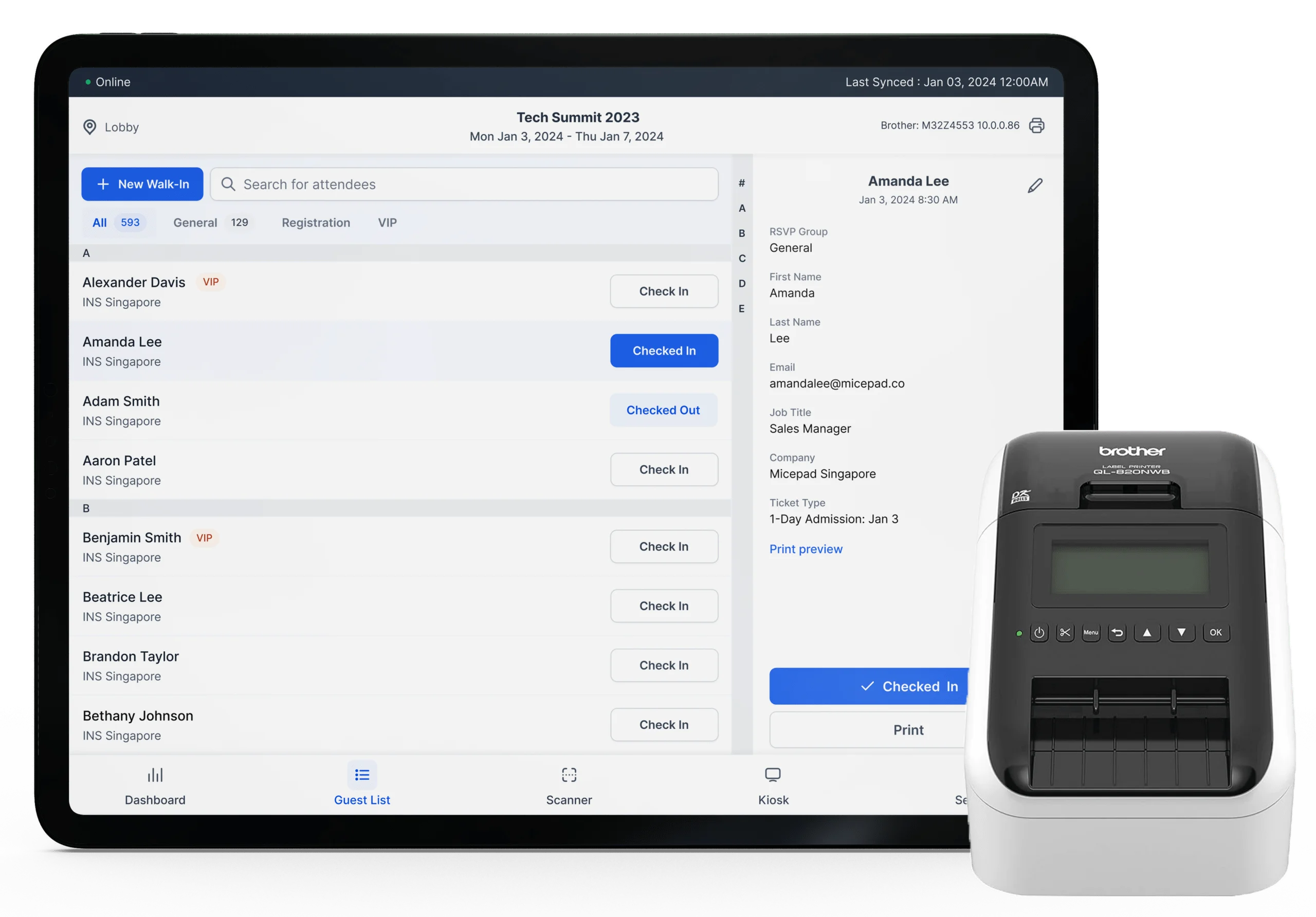
At Micepad, we commit to help you crunch the numbers and boost your event ROI. Our event management platform is ready to give you the insights you need to figure out exactly how well your conferences, seminars, or trade shows are performing. With our data and analytics, planning and analyzing your events becomes a breeze.
Ready to take your events to the next level? Request a demo today and see how we can make your next event a smash hit!

Free event-tech resources
Practical guides, comparison breakdowns, and case studies — published weekly.