




Complete Guide to Become a Successful Event Manager in 2024

In 2024, event management ranks as the sixth most stressful job, thanks to challenging clients, heavy workloads, and unpredictable schedules. Yet, for those who thrive on creativity and leadership, the rewards make it worth the risk. Event managers have the chance to craft unforgettable experiences, whether it’s a corporate gathering or a dream wedding. Despite the pressure, the sense of achievement when an event comes together perfectly is unmatched. If you’re passionate about bringing people together and ready to tackle challenges head-on, this guide will equip you with the tools and insights to become a successful event manager.
What Does Event Managers do?

Event managers are dynamic professionals who specialize in the planning, coordination, and execution of events. (Credit: Freepik)
If you’ve ever attended a seminar, concert, conference, or exhibition, you’ve seen the hard work of an event manager in action. Event managers are the masterminds behind organizing these events, ensuring everything runs smoothly from start to finish. They are responsible for designing, planning, and managing all aspects of an event, whether it’s a promotional, business, or social gathering.
Responsibilities of Event Managers
Event managers wear many hats and handle a wide range of responsibilities to ensure the success of every event. Here’s a closer look at what they do:
1. Planning and Design
Event managers start by crafting comprehensive plans that cover every detail. They discuss the event’s objectives, budget, timeline, and target audience. Collaborating with vendors and clients, they develop a theme, design promotional materials, and set the overall tone for the event to create a cohesive and memorable experience.
2. Venue Selection and Management
Selecting the right venue is crucial, and event managers take this task seriously. They research and choose venues that align with the event’s needs, ensuring they meet all requirements. Coordination with venue staff is essential to arrange facilities like parking, security, and catering, making sure everything is set for the big day.
3. Supplier and Vendor Management
Event managers negotiate with suppliers and vendors to source necessary services and materials. They handle contracts, monitor performance, and ensure that everything is delivered on time and within budget. Building strong relationships with reliable vendors is key to ensuring quality and efficiency.
4. Budget Management
Managing budget is one of the must-have skill for event managers. (Credit: Freepik)
Managing the event budget is a critical responsibility. Event managers allocate funds wisely, monitor expenses, and strive to keep everything within budget while maximizing the event’s impact and event ROI. Financial savviness is crucial to delivering successful events without overspending.
5. Risk Management
Identifying potential risks and developing strategies to mitigate them is part of the job. Event managers implement safety measures, create contingency plans, and ensure compliance with legal, health, and safety regulations. Being prepared for unexpected challenges helps ensure a smooth event experience.
6. Marketing and Promotion
Attracting the right audience is essential, so event managers create and execute marketing strategies. They use a mix of social media, event email marketing, and print advertising to build excitement and encourage attendance. Effective promotion ensures that the event reaches its intended audience.
7. Registration and Ticketing
Handling the registration and ticketing process is another important task. Event managers ensure the system is efficient and user-friendly, managing online registrations, tracking ticket sales, and keeping organizers updated on numbers and revenue.
8. Event Execution
Not just planning, event managers also handle the event execution. (Credit: Freepik)
On the day of the event, event managers are on the ground, making sure everything runs according to plan. They coordinate the event team, oversee setup, troubleshoot issues, and ensure the event meets its objectives. Their hands-on approach ensures a seamless experience for attendees.
9. Post-Event Evaluation
After the event, event managers gather feedback from attendees, organizers, and team members. They analyze this information to evaluate the event’s success and identify areas for improvement. This helps refine future events and ensures continuous growth and learning.
10. Documentation and Reporting
Keeping detailed records is vital. Event managers document activities, budgets, and performance metrics, preparing comprehensive reports to share insights with organizers. This documentation provides valuable information for future events and highlights successes and areas for growth.
Event managers are the driving force behind creating engaging and successful events. Their ability to juggle multiple tasks, plan meticulously, and adapt to challenges makes them indispensable in the world of event planning.
What Are The Key Skill Set of an Event Manager?
To succeed as an event manager, having the right skill set is crucial. While there are many skills you can develop, here are the top ten that stand out for their importance in managing events effectively:
| Skill | Description of The Skills | Skill Used In |
| Visionary Leadership | Being able to inspire and direct your team towards a common goal. This involves creating a vision that elevates an event from a plan to an experience. | • Setting the overall direction and goals for the event • Motivating your team • Ensuring everyone is aligned towards a shared vision |
| Communication | Essential for building relationships with clients, partners, and teams. Involves verbal, written, and nonverbal communication to ensure everyone is on track. | • Interacting with clients and partners • Instructing team members • Resolving misunderstandings • Ensuring clear communication across different platforms and cultures |
| Strategic Planning | Involves aligning every event detail with strategic goals, taking into account market trends, audience preferences, and organizational objectives. | • Creating detailed road maps • Anticipating needs |
| Problem-Solving | Quickly identifying and resolving issues that arise during the planning or execution phases. | • Dealing with unexpected problems such as technical issues or logistical challenges • Finding effective solutions with minimal disruption |
| Budget Management | The ability to create, manage, and track budgets to ensure financial goals are met without overspending. | • Planning expenses for venues, speakers, and other event elements • Ensuring profitability • Making adjustments to stay within budget |
| Organizational Skills | Critical for managing multiple tasks, delegating responsibilities, and keeping track of all the details. | • Juggling tasks like managing staff • Coordinating with vendors • Overseeing the timeline to ensure everything runs smoothly |
| Adaptability | Staying composed and flexible in the face of changes or unexpected situations, and turning challenges into opportunities. | • Handling last-minute changes, such as venue issues or weather disruptions • Adjusting plans while maintaining a positive and resourceful attitude |
| Time Management | Prioritizing tasks and managing your time effectively to meet tight deadlines and ensure the successful delivery of events. | • Scheduling tasks • Meeting deadlines • Ensuring every aspect of the event is completed on time without sacrificing quality |
| Negotiation | The art of securing the best deals with suppliers and vendors, which impacts the overall profitability and success of the event. | • Discussing terms with vendors • Negotiating contracts, and ensuring favorable rates while maintaining positive relationships |
| Stress Management | Developing strategies to manage stress and maintain a positive working environment for yourself and your team. | • Coping with the pressures of tight deadlines, heavy workloads, and unexpected challenges. |
What Are The Qualifications of an Event Manager?
If you’re eyeing a career as an event manager, you might be wondering about the qualifications you need to stand out. The good news is that there’s no one-size-fits-all path to becoming a successful event manager, but having a bachelor’s degree can certainly help you get started.
Many event managers also come from diverse backgrounds, such as marketing, public relations, hospitality, or arts administration. To really shine, you might want to brush up on some computer skills, especially with word-processing and digital filing softwares since digital and virtual events are in trend. However, here are some common degrees and qualifications that fit well for an event manager role:
- Event Management
- Leisure and Tourism
- Hotel and Catering Management
- Business
- Marketing
- Public Relations
- Arts Administration
Experience is another key component. If you’ve worked in event production, you probably already have some valuable experience under your belt. This includes knowing how to recruit and handle vendors, incorporating social media into your event strategies, and even managing celebrity appearances.
In some countries, there are specific qualifications you can pursue, like a Diploma or Advanced Diploma of Event Management or even a Bachelor of Business with a focus on Event Management. These programs offer targeted education and training that can give you a strong foundation in this field.
Top 17 Challenges All Event Managers Face
If you are planning an event soon, then here’s a portion (yes, a portion!) of what you need to be ready to deal with:
1. Overbudget

Or in other words: your money.
This is an important factor that will determine whether you’ll either get a comfortable estimate and enough cushion for unexpected costs or end up having to create a miracle. Whether you’re managing this event for personal reasons or for a client – the first rule of budgeting for events is to always over-budget.
Managing your money is as good as managing your entire event. While the aim is to reduce costs as much as possible, it is very likely that you’re going to exceed your initial budget estimation.
2. Lack of Buy-in

The greatest roadblock to getting that comfortable budget is usually a lack of buy-in from upper management (or the accounts department).
But convincing these people is also part and parcel of being event management, which is why it is always important to support your proposal with research, costings and elaboration on why those fuzzy dinosaurs are important in making the event a success. It’s also a good way to check if you have a clear plan for this event – if you don’t have a solid plan of action, chances are you need to head back to the drawing board first before even thinking of moving forward.
P.S. This also ties in with ROI, which is number 17!
3. Venue

So you’ve got a budget and your management has agreed to let you work your magic. Fun! Now the next thing you need to figure out is where your event will take place.
What kind of setting do you have in mind and will it be appropriate for your event? A picnic would have a very different context from a doctor’s conference. What sort of feel or ambience are you aiming to create? Indoors or outdoors? Exciting or intellectual?
Another issue is getting that venue locked in before you miss out. Give yourself a day or two to have that debate over whether this place is better than that location, but know that any good spots are likely to be popular spots.
(And in the case you end up cancelling that booking last minute and forfeiting your deposit…why not sell it to another event manager? If it’s a popular venue, you’re very likely to get takers and recoup some of the loss.)
4. Travel

Now that you’ve booked your venue, the next question needs to be answered: Travel.
If this is an event where people are going to be travelling to, the least you will need is clear directions. Send emails, put it up on the event website, or even text your guests: communication is paramount. People will get lost.
And if this is an international event with people flying in to attend, then there’s another question: Will you be covering their travel fees?
If the answer is no: breathe a sigh of relief. Otherwise, depending on how distinguished your guests are, you could justify flying Economy or end up forking a sizeable portion of your budget for at least Business class.
5. Accommodation

…goes hand in hand with travel. If guests have flown in to attend your event, will you be handling their accommodations? If not, then it’d be good to provide some suggestions on which hotel would be most convenient.
If yes, then yet again: it’ll depend on whether your guests are going to stay in a 3-star or 5-star hotel or even an Airbnb.
P.S. No matter what type of accommodation they will be staying in, it’ll still take time, planning and money to book enough rooms. That’s why number 14 on the list: RSVP is so important.
6. Menu

Some of your guests will have special dietary restrictions. Whether it’s religious, health-related or just personal preference, you’ll need to provide a menu that accommodates (hah!) all of them.
Most of the time, having a regular menu and a vegetarian one works out, but be sure to check for more peculiar requests like gluten-free or lactose-free.
Sending out a form when RSVPing is the typical way of getting those preferences listed, but it is always important to get them ASAP. If you’re providing packed meals, always get extras – otherwise it’s doubly important to get these special requests to your kitchen early.
7. Security

Certain events require a level of confidentiality. When that happens, there needs to be security. Whether it’s avoiding assassins (yes, really) or just preventing pesky unauthorised paparazzi, you’ll need to be aware of what level of security is required.
It could be as simple as arranging staff at the doorway, or hiring auxiliary police. But the best way is to make sure nobody but invited guests know the event is even happening.
8. Vendors

Which is why having trustworthy vendors is so important! If you’re an old hand at events management, you’ll have a list of vendors whom you trust.
If you’re new to this though, it’ll depend on how much security you need. If this is an open event, feel free to cherry pick through reviews and prices. Otherwise, go with bigger names to prevent issues.
It’s also important to note that the key to success is communication yet again. Your vendor can’t provide good service if they don’t know what you need. Make sure you outline what you want from them clearly and manage expectations.
Get quotes from different vendors: this will also allow you to get a better sense of whether your budget suits the event plan you have in mind.
9. Engagement

The most important part of your event is to ensure that your guests have not just a good time, but that the initial goal of the event is met.
If this is a marketing event, you want to wow your audience into buying your product/service.
If this is a stakeholder event, you want to convince your stakeholders to continue to invest.
If this is an internal training workshop, you want your attendees to remember the lessons.
How you get that wow factor depends on the level that you engage your audience on. Is it a one-way interaction where speakers talk and they listen with 10 minutes of Q&A at the end, or do you conduct live polls during the talk or gamify lessons with activities?
10. Planner’s Block

By the time you’ve addressed the previous question, you might be feeling a little burnt out. That’s why it’s important to take care of yourself. Even when things are busy, give yourself time to step out and refresh, it might help you look at things through another perspective.
Otherwise, chat with your colleagues, supervisor, or friends. You never know when inspiration may strike.
And more importantly, you won’t compromise your health!
11. Technology

In fact, a few of the challenges listed previously might be solved with some technology.
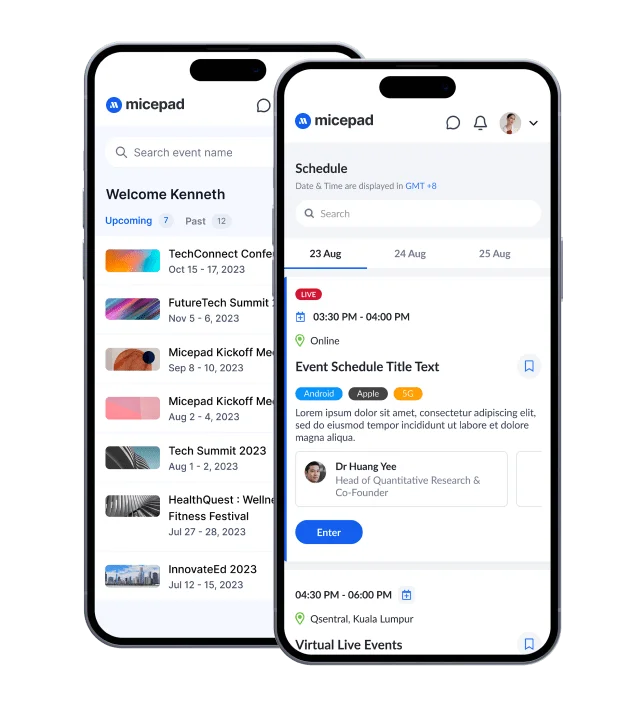
For example, getting an event app might help you organise things a lot more efficiently and communicate with your guests. Studies have shown that a push notification is more likely to be viewed than an email.
This way, you can set phone reminders, post content, upload the event schedule and/or speaker profiles to the app on top of your event website and email campaigns.
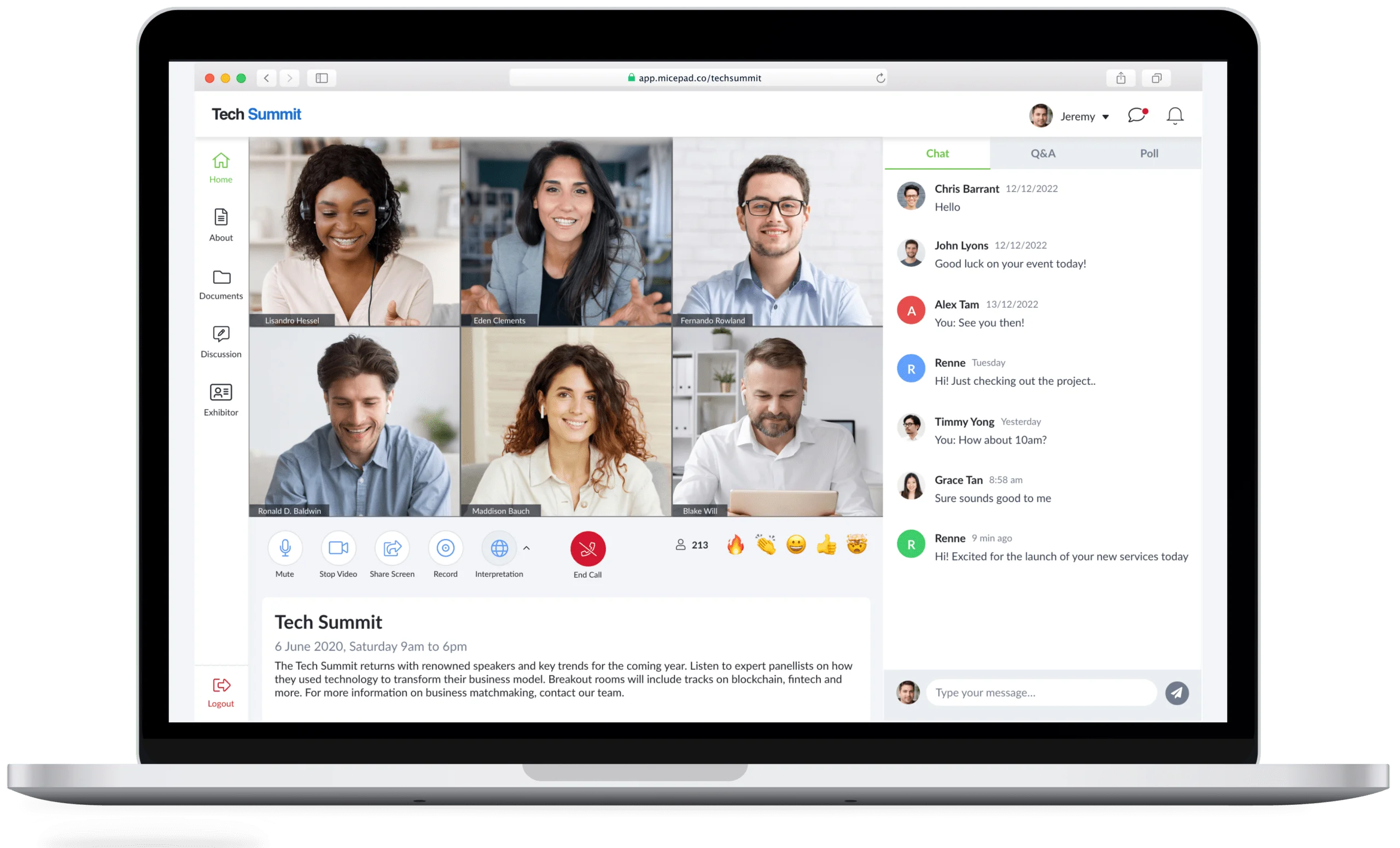
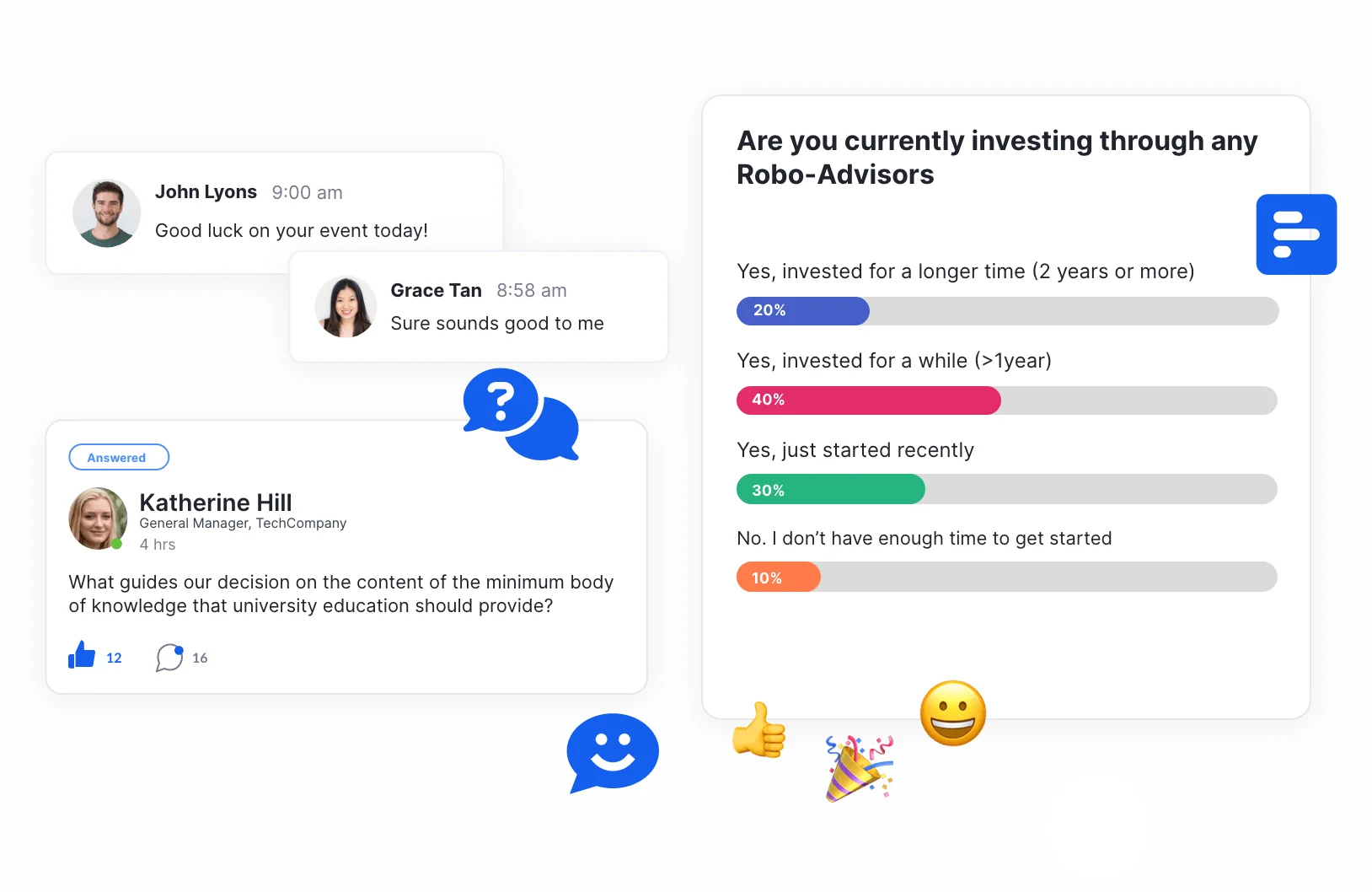
You can also hold live polls and Q&As through an event app, getting attendees to ask or answer questions with their phones. And that’s only the tip of the iceberg on what investing in some event tech could do for you!
However, using new technology always takes time to get used to. Particularly if your audience is in the older bracket. It is essential to know your guests and tailor your event tech (or at least the instructions) to their level of savviness.
12. Keep Track of Processes and (Your) People

There are already 11 points you need to track on this list (with 6 more to go!), that’s not including the fact that you are most likely to be tackling several of them at the same time.
Additionally, if there are other staff members supporting the event, you’ll need to be able to keep track of them as well as their schedules. Who is manning the door at 10 AM? Who is ushering the guests in the morning or after the intermission?
13. Keep Track of Time

Speaking of keeping track, here’s another: time.
On top of the slew of questions previously mentioned, there are even more regarding timing. When will the first speaker go onstage? When will the intermission occur? When will the food arrive?
On that note: how many excel sheets have you made to track all these issues?
14. Keep Track of Guests

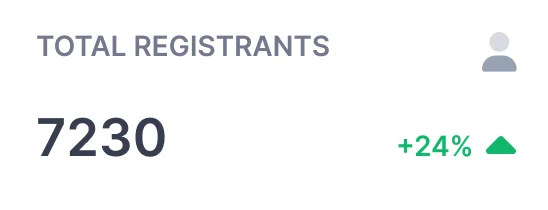
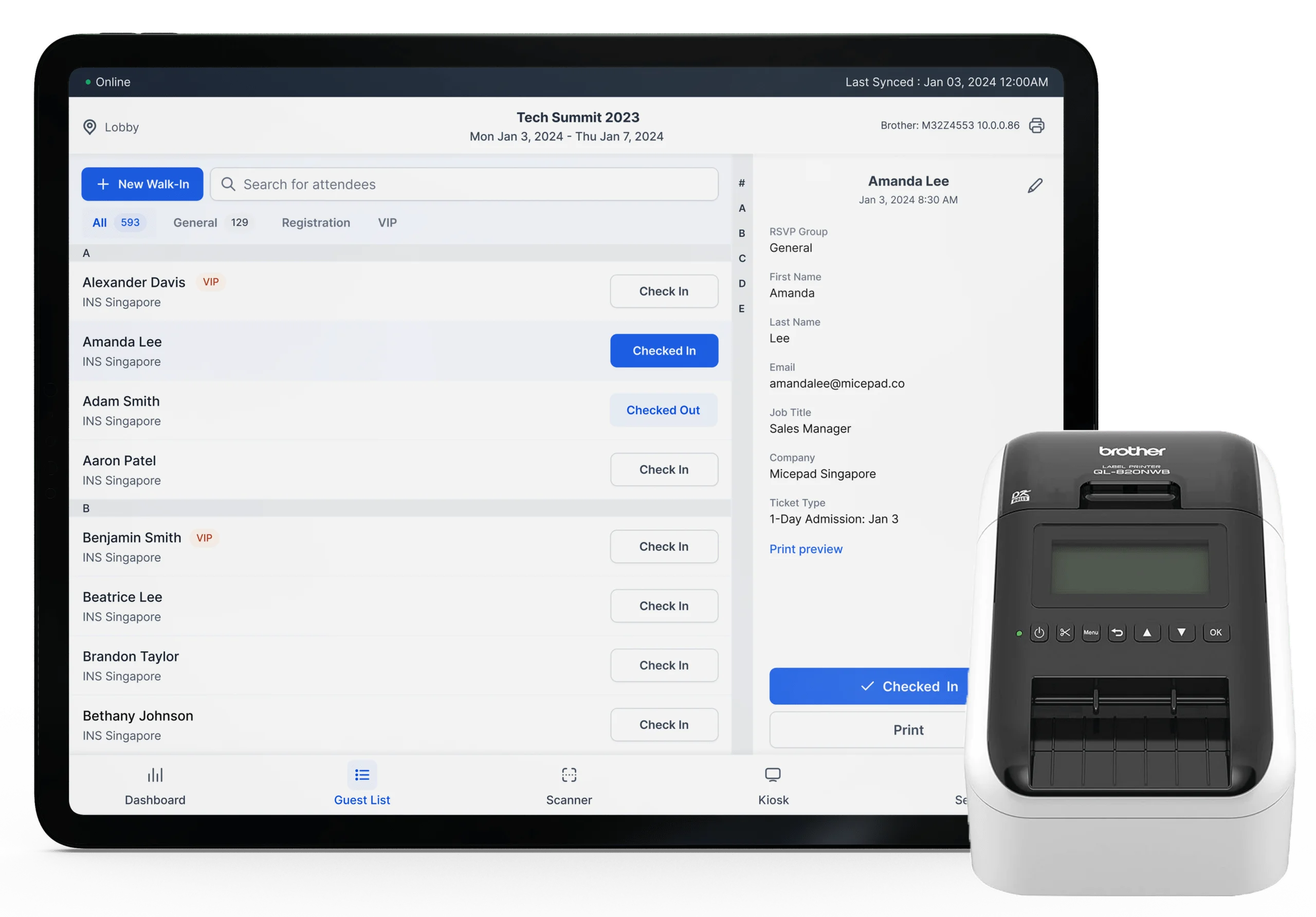
Before the event day, you would definitely have sent out invites. Of these, how many invitees have indicated their attendances (RSVP)? And even more crucially, out of these invitees who have said they would attend…how many actually do turn up at the door (Check-in)?
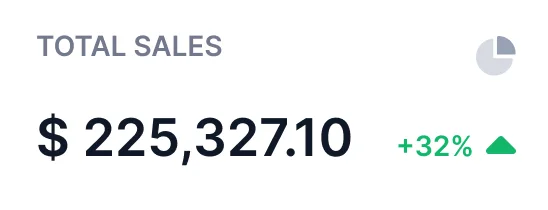
All of these are factors to calculate that extremely important ROI that you will be reporting to your supervisor/client. Which is why it is necessary to track for both RSVP/registration and Check-in.
For RSVP/registration, you could:
- Send out emails requiring RSVP confirmation
- Call/Text/create chat groups
- Send old-fashioned snail mail
Once that’s done, you can then check who actually attends during Check-In with this list of registered guests by:
- Getting attendees to sign beside their name on a list at the door
- Have them flash their confirmation email to the reception
- Scan their unique QR code sent either through email or with the event app
Be warned though, there’s also the issue of unexpected guests who were on your guest list but did not register…who decided to turn up anyway.
15. Acts of God

Sometimes everything has been planned to perfection and nothing goes wrong…except the weather. Or an earthquake. Or people get sick/injured/family emergencies.
The only thing you can do? Move on to the next point, and the next event. Oh, and make sure you have insurance coverage (for other emergencies, not Acts of God).
16. Multiple Events All At Once

It’s very likely that a professional event manager will have to juggle multiple events at once. Or a company’s department will need to plan for a series of training workshops. However many events there are, you will be just as many times busier.
The best advice we can give would be to make sure you track everything as clearly as possible. Don’t mix up spreadsheets, try not to have too many different vendors for different events (negotiate for a bulk discount if you can!), and ask for help when you need it!
17. ROI
Finally, after your event(s) has ended, you will need to report the results and measure the success of your months of hard work through event ROI metrics. Even if it’s to yourself. The metrics of an event can differ greatly, but here are a few:
- The number of (actual) attendees (RSVP-ed or otherwise)
- Feedback of the attendees (sometimes of the speakers)
- Cost (per attendee, per registration, per conversion)
- Brand impact
- Social media
- Marketing impact
- Sponsor interest
Finally, for your own takeaway, ask these question: did the people enjoy themselves at your event? Are you satisfied with how things went?
And would you tackle the 5th most stressful job in the world again?
Essential Event Tools Every Event Manager Should Know About
As an event manager, staying ahead in the fast-paced world of event planning means embracing the latest tools and technologies that can make your job easier and more efficient. Here are some essential event tools that can help you plan and execute successful events:
1. Event Management Software and Platforms
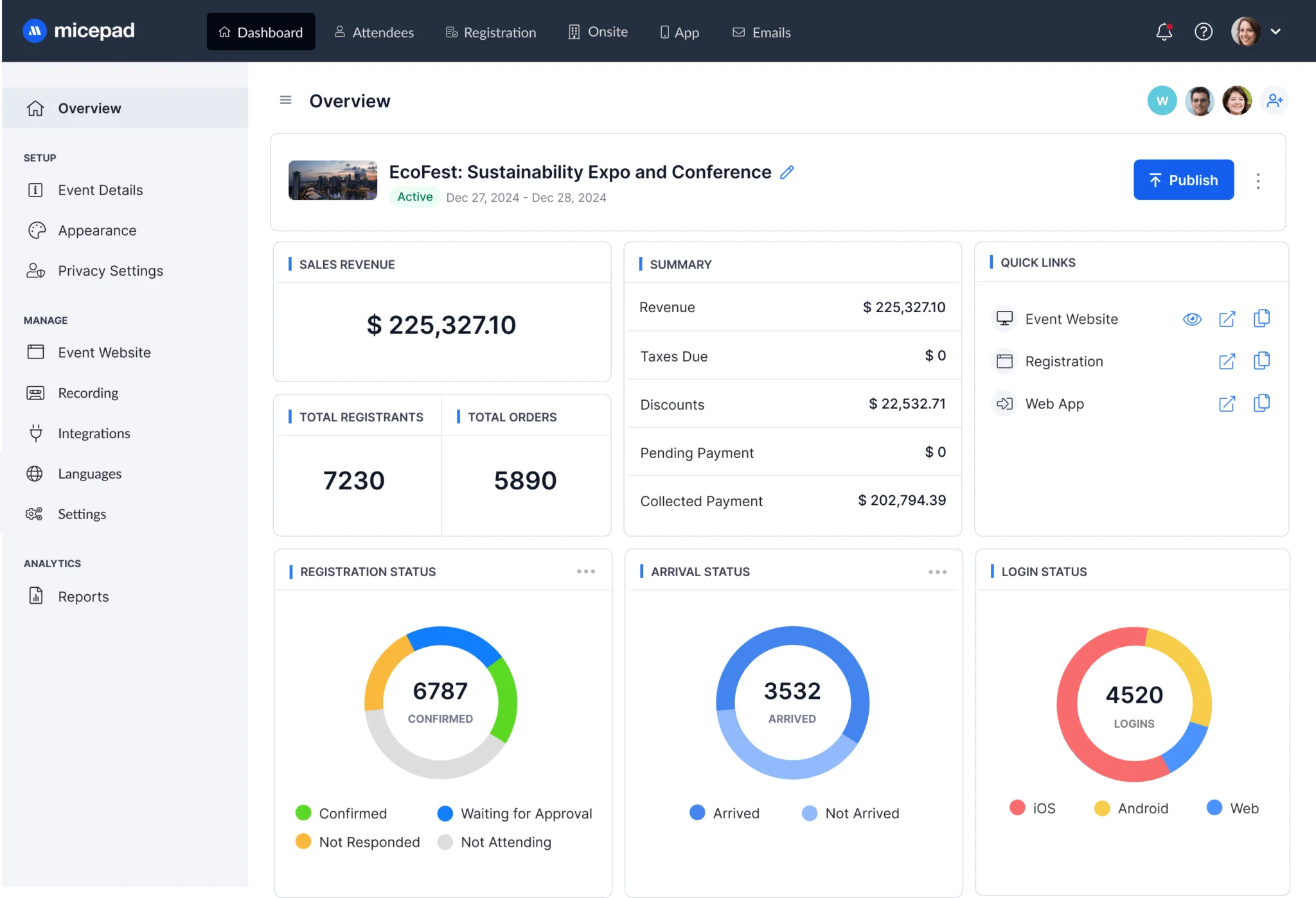
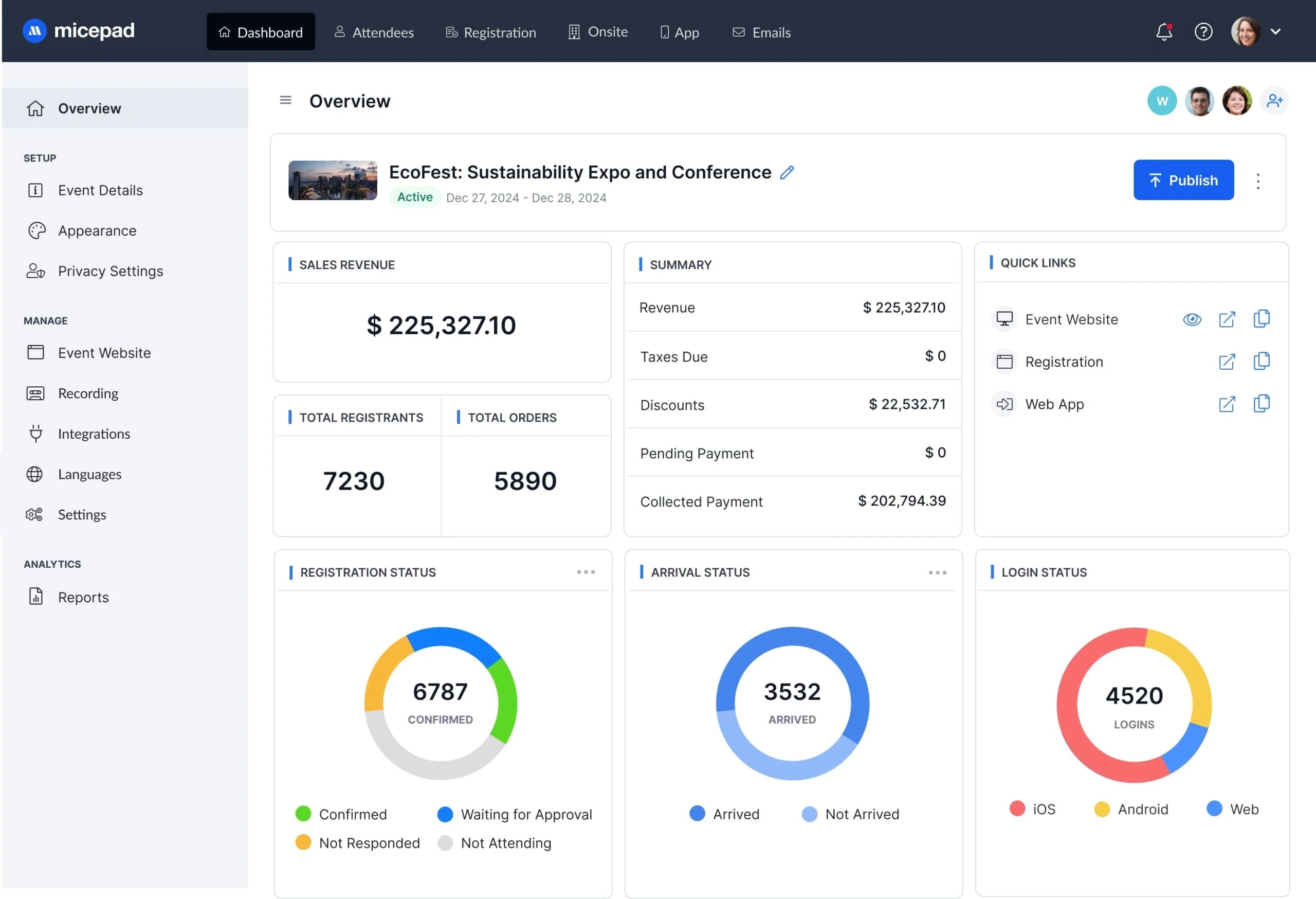
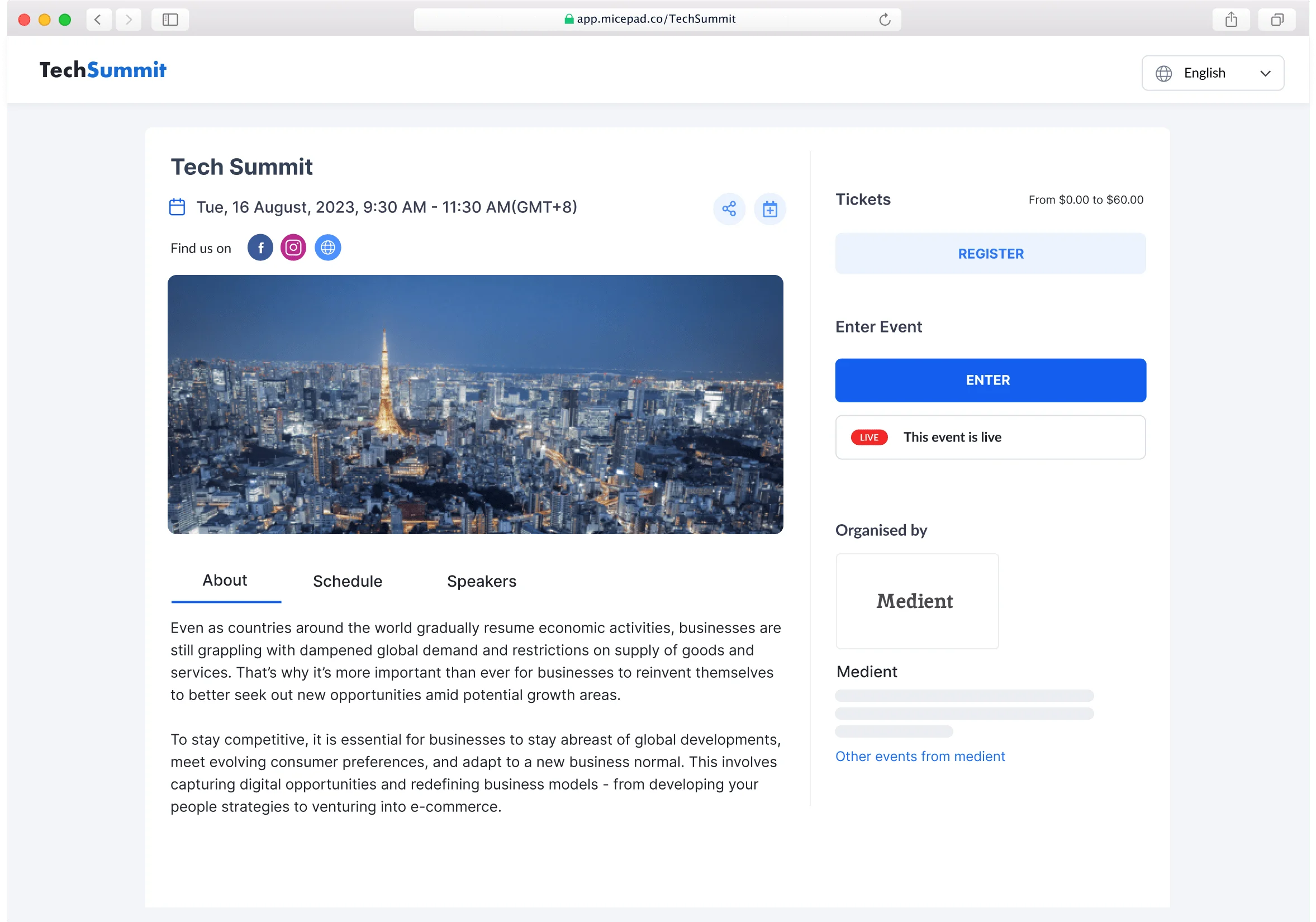
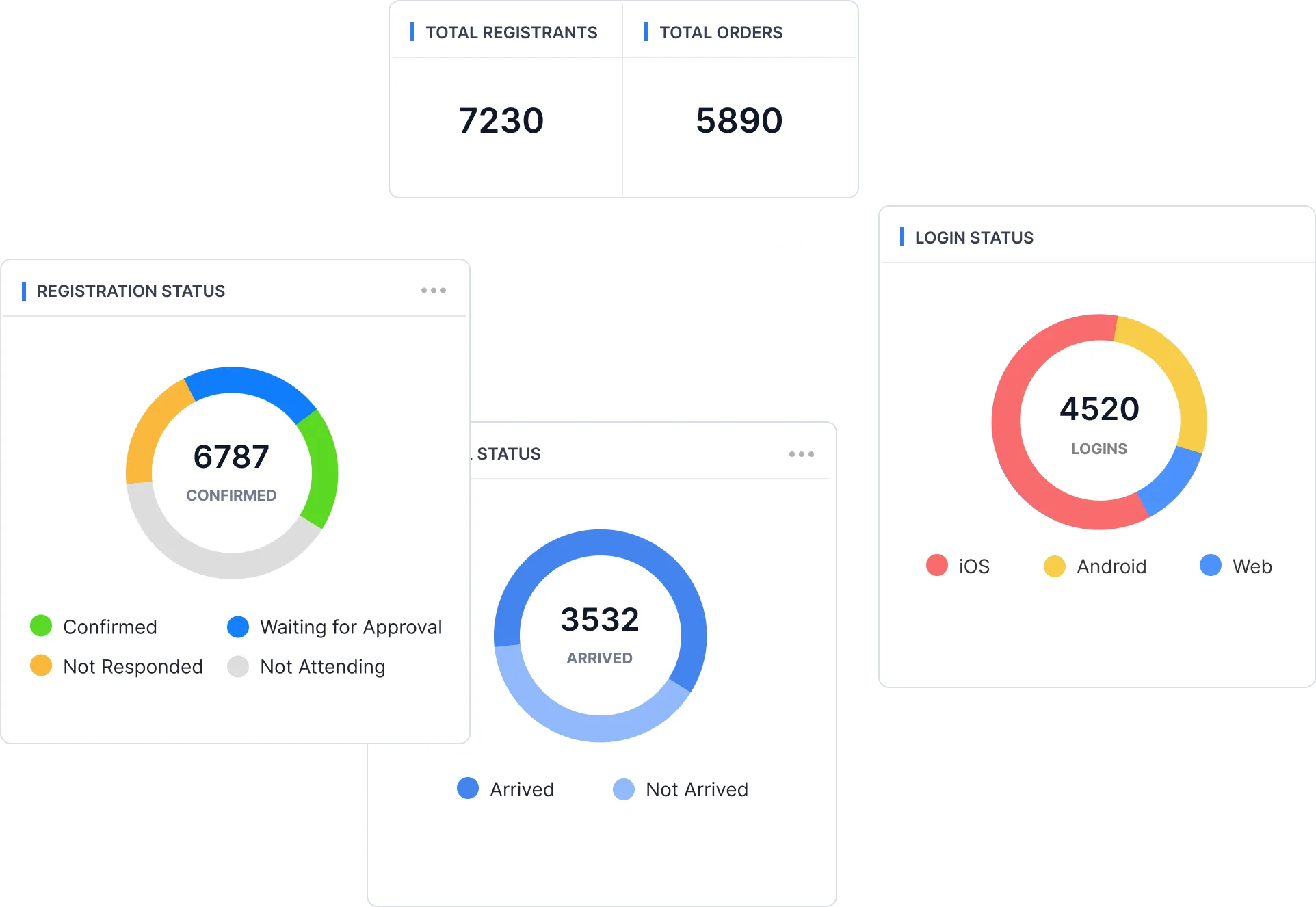
Event management softwares, such as Micepad, is a game-changer for planning and organizing events. These platforms offer a wide range of features, including event registration, ticketing, payment processing, scheduling, and venue selection. With these tools, you can effortlessly manage logistics, track attendees, collect payments, and gather feedback, streamlining the entire process.
2. Event Diagramming and Digital Floor Plans
Event diagramming and digital floor plans have become invaluable for event planners. They allow you to visualize and design the layout of your event space, making it easier to collaborate with your team and vendors. These tools let you create and edit graphical representations of event spaces, including tables, chairs, stages, and booths, ensuring everything is perfectly planned.
3. Mobile Event Apps
Mobile event apps enhance the attendee experience by providing access to schedules, speaker bios, session details, exhibitor lists, and venue maps. These apps help attendees stay informed and plan their time effectively. They also facilitate networking opportunities, allowing attendees to connect with others, join discussion groups, schedule meetings, and chat live with speakers and sponsors. Interactive features like live polls, surveys, Q&A sessions and gamification elements such as scavenger hunts and challenges keep attendees engaged and entertained.
4. Social Media Interaction
Social media is a powerful tool for engaging potential attendees and fostering community around your events. It enables attendees to share their experiences, increases engagement, and keeps everyone informed in real-time. By utilizing user-generated content, hashtags, and live updates, you can create buzz and excitement around your event.
5. Digital Marketing Tools
Digital marketing tools, especially email marketing, are crucial for event planners. Email marketing allows you to create highly targeted campaigns that resonate with specific audiences, leading to higher conversion rates. However, successful email marketing requires careful planning, execution, and evaluation to ensure engagement and effectiveness. Following best practices and legal regulations is essential to avoid any negative consequences. When done right, email marketing can significantly boost your event’s success.
6. Communication and Collaboration Tools
Effective communication and collaboration are vital for event planners. Tools like Slack, Asana, and Google Workspace enable seamless connectivity with your team, stakeholders, and attendees. These tools facilitate project management, file sharing, and task tracking, making planning and organizing events more efficient and productive.
By incorporating these essential tools into your event management strategy, you can elevate your events, streamline processes, and create memorable experiences for your attendees.
FAQs About Event Manager
What is the difference between event planners and event managers?
An event planner handles the preparation of an event, while event managers coordinate all aspects of implementing the event. An event planner focuses on preparing and organizing the event, ensuring everything is ready for the big day. This includes tasks like selecting venues, arranging decor, and planning schedules.
On the other hand, an event manager takes charge of coordinating all aspects of implementing the event. They ensure everything runs smoothly, handling any issues that arise during the event and ensuring that every detail falls into place. So, while planners lay the groundwork, managers bring the event to life.
What is the job objective of an event manager?
The main job objective of an event manager is to conduct both short- and long-term planning and management for events and sales. This involves strategizing to meet immediate event goals while also laying the groundwork for future opportunities. Whether it’s coordinating logistics, managing budgets, or ensuring customer satisfaction, event managers focus on achieving success for each event while building lasting relationships with clients.
What is the key to being a successful event manager?
The key to being a successful event manager is your ability to interact with individuals at all levels of an organization. Being a comfortable communicator and a team player is essential. You might be shortlisting entertainment suppliers one day and meeting the CEO of your client’s organization the next, so you need to be versatile. Building strong relationships and working seamlessly with diverse teams helps ensure the event’s success and your growth as an event manager.
As a wrap up, you need to remember that this role requires a blend of creativity, organization, and strong communication skills. Navigating challenges like demanding clients, heavy workloads, and unpredictable schedules is crucial, but the rewards of orchestrating memorable events make it all worthwhile.
In today’s fast-paced world, being tech-savvy is more important than ever. Mastering event management softwares, social media platforms, and other digital tools can significantly enhance your efficiency and effectiveness. Stay adaptable, embrace new technologies, and continually refine your skills to stay ahead in this dynamic field. With the right mindset and preparation, you can thrive as an event manager and make every event a resounding success.