How to Say Goodbye to Boring Meetings Once and For All
There is an undeniable consensus that attending a business meeting is not exactly what we would call the most exciting event of the year. We have all been guilty of it at one point, when we strain our ears to pay attention and, oops-a-daisy, find ourselves falling asleep during a meeting. Try as you may, but you just cannot seem to resist the soporific voice luring you to sleep. Nevertheless, eschewing meetings is not the solution to the problem.
The Culprit to Boring Meetings and Solutions
1. Endless Meetings That Drag On

Endless meetings that drag on can lead to disengagement and reduced productivity. (Credit: Freepik)
Long, drawn-out meetings can make even the most enthusiastic participants lose focus and interest. When meetings run too long, they turn into talkfests where attendees start checking out mentally. It’s crucial to keep your meetings short, to the point, and respectful of everyone’s time. If your meeting stretches beyond 20 minutes, you might find yourself speaking to a room full of people who’ve already checked out. Keep things concise, and you’ll maintain energy and engagement.
One of the most effective ways to avoid lengthy meetings is to establish a strict time limit beforehand. Make it clear to all participants that the meeting will not exceed this timeframe. This approach not only keeps the meeting focused but also ensures that everyone stays on topic, knowing that there’s a finite amount of time to cover everything.
- Decide on a realistic time limit based on the meeting’s agenda.
- Communicate this time limit to all attendees in advance.
- Use a timer or a clock visible to all participants to track the time during the meeting.
2. Unprepared Hosts and Chaotic Agendas
Nothing kills the vibe faster than an unprepared meeting. When you pull people into a room without a clear purpose or a structured agenda, you’re setting yourself up for failure. A well-thought-out agenda is your roadmap to a productive meeting. Without it, discussions can meander aimlessly, and participants will feel their time is being wasted.
A well-prepared agenda is your best defense against meetings that drag on. By outlining the key topics and allocating specific time slots to each, you can guide the meeting efficiently. Prioritise the most important points and be prepared to cut less critical discussions if time is running short.
- Draft a clear and concise agenda with specific time allocations for each topic.
- Share the agenda with participants before the meeting so they can prepare.
- Stick to the agenda during the meeting, steering the discussion back on track if it veers off course.
3. The Never-Ending Monologue

Having one overly dominating speaker can stifle participation and make the meeting less engaging for everyone involved. (Credit: Freepik)
We all know that one person who loves the sound of their own voice. When meetings are dominated by one person’s endless chatter, it stifles the input of others and makes the experience dull for everyone else. To keep your meeting dynamic, make sure everyone has a chance to speak and contribute. Moderating the conversation and setting time limits for each speaker can help keep the meeting balanced and engaging.
A round-robin approach ensures that everyone in the meeting has a chance to speak and that no one person dominates the conversation. By going around the table (virtual or physical) and giving each participant a set amount of time to share their thoughts, you can create a more balanced and inclusive discussion. This method encourages quieter participants to contribute while preventing anyone from monopolising the meeting.
- At the beginning of the meeting, explain the round-robin format and its purpose.
- Allocate a specific amount of time (e.g., 2-3 minutes) for each participant to speak.
- Use a timer or assign a timekeeper to gently remind participants when their time is up.
- After everyone has had their turn, open the floor for additional comments or follow-up discussions.
4. Lack of Clear Purpose
A meeting without a clear purpose is like a ship without a rudder—it’s bound to drift off course! If your participants don’t understand why they’re there or what the meeting is supposed to accomplish, they’ll quickly lose interest. Before sending out invites, ask yourself:
What’s the goal of this meeting? Make sure everyone attending knows the purpose and what’s expected from them by the end of it.
To keep all participants engaged, it’s crucial for you to know exactly what you want to achieve before the meeting even starts and make sure that everyone invited understands this goal. A clear objective gives direction and purpose, helping to prevent the meeting from drifting off course.
- Before scheduling the meeting, ask yourself: What specific outcome do you need to achieve? Is it to make a decision, solve a problem, or share important updates?
- Clearly state this objective in the meeting invitation and agenda. For example, instead of saying, “Team meeting,” specify, “Meeting to finalise the marketing campaign for Q4.”
- At the beginning of the meeting, restate the objective to ensure everyone is aligned and understands what is expected by the end.
5. No Visual Stimulation

Humans are wired to process visual information, so when you hold an audio-only meeting or don’t include visual elements, you’re missing out on a powerful engagement tool. Without something to look at, it’s easy for attendees to get distracted by their phones or computers.
Well-designed slides, infographics, and visual aids can help convey your message more clearly and effectively than words alone. These elements not only break up the monotony of a meeting but also cater to different learning styles.
- Create slides that are visually appealing and not overloaded with text. Use bullet points, images, charts, and graphs to highlight key points.
- Incorporate infographics or diagrams where possible to simplify complex information and make it easier to understand at a glance.
- Use color strategically to draw attention to important elements on your slides, but avoid overwhelming your audience with too many different colors or busy layouts.
- Ensure your slides are visible to everyone, whether you’re in a physical room or conducting a virtual meeting. Test screen-sharing tools in advance if meeting online.
Another approach is to incorporate live screen sharing and interactive tools. By sharing your screen, you can walk participants through documents, presentations, or real-time data, making the information more tangible.
- Use screen-sharing tools to walk through key documents or presentations in real time. This is especially useful when demonstrating processes, reviewing data, or discussing visual content.
- Incorporate interactive tools such as digital whiteboards, where participants can contribute ideas or collaborate on visuals during the meeting. This keeps everyone engaged and involved in the discussion.
- If appropriate, use live polls or quizzes to gather immediate feedback and keep the session lively. These tools not only make the meeting more interactive but also provide valuable insights into participant opinions and understanding.
- Ensure that all participants are familiar with the tools you’ll be using. Consider a brief tutorial at the beginning of the meeting or sharing instructions beforehand.
6. Mobile-First Silent Traveler Phenomenon
To make all the problems worse, there is a widespread phenomenon called Mobile-First Silent Traveller. It is when a human and their phone become inseparable. They rely heavily on their mobile devices and look to it to solve all their problems.
This seemingly insufferable act has set off angsty social commentary, to the tune of dozens of dissidents ranting online whenever they see a mobile device constantly clutched in their hands, especially on the public transport.
They ignore basic courtesy to move to the rear on public transport and block people’s way while they amble on with their eyes transfixed on their mobile devices. If it is already so difficult to capture their attention in normal situations, it becomes even harder to do it during a meeting.
Towards An Interesting Meeting
So what happens now? You can either twiddle your thumbs and wait for guests to grow tired of congregating for a meeting or you can up the ante and make your meeting more interesting.
Here are some ways you can go about doing so:
1. Invite Good Speakers
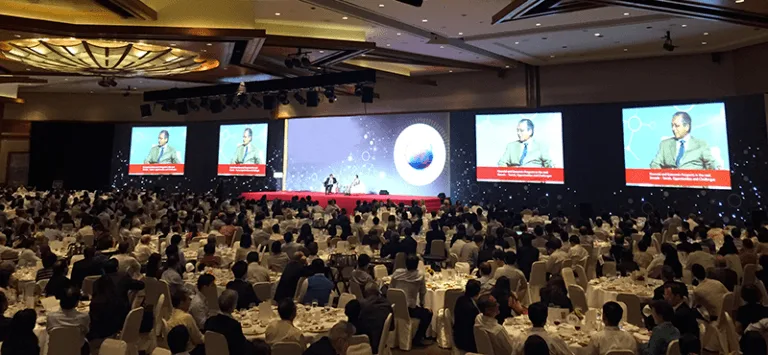
Never underestimate the impact a good speaker can make on the audience. They know when the crowd is losing interest and are able to find ways to get their attention back. Some well-known speakers require an honorarium, but it will be worth it because of the sheer number of people the speaker is influencing.
Former Prime Minister Dr Mahathir Mohamad speaking at a conference using Micepad App at the Ritz-Carlton Singapore.
2. Present with Well-Made Slides
Well-crafted slides do more than just look good and they actually draw people in and keep their attention. A clean design paired with smart font choices makes your slides not only easy on the eyes but also much more readable. When you take the time to design your slides thoughtfully, you’re setting the stage for a presentation that truly resonates with your audience.
No one enjoys dull, lifeless slides. Feel free to break things up with a mix of text and images. Just as a colorful bouquet can brighten someone’s day, adding vibrant visuals to your slides can have a similar effect, making your presentation more engaging and enjoyable.
And if you’re scratching your head wondering how to spice up those mundane meetings, here’s a simple solution: meeting memes! In a remote work environment where face-to-face interaction is limited, memes can add a fun, personal touch to your communication. The great thing about meeting memes is that they inject personality into your meeting chats, giving everyone a chance to share a laugh while keeping things respectful and on-topic. It’s an easy way to turn a boring meeting into a memorable experience for everyone.
3. Create Unique Session Formats
Most delegates come to a meeting or a conference expecting the usual one-way dialogue with a predictable agenda. One way to keep things interesting is to switch it up with different kinds of session formats. From our experience, some formats that have been used to great effect are:
- Panel Discussions,
- TED Talks, and
- Distinguished Keynote Addresses
Not to mention the positive effects we’ve witnessed engagement tools have on facilitating two-way communication, even for top level meetings.
4. Kick Off With An Icebreaker
As the meeting host, it can be challenging to get everyone engaged, especially if some participants don’t know each other well. When people feel uneasy, they’re less likely to jump into the conversation. That’s where an icebreaker comes in handy—it helps to break down barriers and gets everyone more comfortable from the start.
Don’t worry; your icebreaker doesn’t need to be complicated. Something as simple as asking each person to share a highlight from their weekend and then pass the baton to another teammate can do the trick. Just keep it light and easy.
If you’re looking for a popular icebreaker, try the “Two Truths and a Lie” game, where everyone shares three statements about themselves—two true and one false—and the rest of the team guesses which one is the lie.
Another simple yet fun option is asking everyone to share a photo of something meaningful to them, like a pet or a favorite travel spot, and explain why it’s special. These quick activities can help create a relaxed atmosphere and set a positive tone for the rest of your meeting.
5. Use Engagement Tools
Event apps are a powerful engagement tool that have been found to increase active participation from the audience. With their attention fully on the speaker and the app, it increases their retention of material covered during the meeting, thereby making the meeting more productive.
What the Mobile-First Silent Traveller phenomenon serves to illustrate is that the majority of the population is already very tech-savvy; so tech-savvy, in fact, that they find it difficult to part with their electronic devices. Considering how recent this phenomenon is, it goes to show how technology is able to catch on like wildfire. Thus, it is quite easy to introduce new EventTech into a meeting and get a high adoption rate.
You can capitalise on the mobile-first population by having them check out the elaborate contents of your meeting via an event app instead of checking their phones during the meeting. With this new-age technology, you can lure them out of their stupor and into the throes of your engaging content.
Since they are already accustomed to using technology, it will save you the problem of them having issues with the devices. Furthermore, the information-rich device plays to their tech-fueled curiosity, making your meeting efforts more memorable as they fiddle with the device.
Conclusion
In this rat race, only the modern and wayward will prevail. Keep your meeting from being boring by enthralling your participants with a burst of excitement and a hip event app.It might just be the very ingredient you need to freshen up your guests and make your meeting the meeting of the year.
In short
If you’re looking to elevate your next meeting, why not give the Micepad’s event app a try? It’s designed to keep your audience engaged and focused, making every moment of your meeting count. With features that enhance interaction and participation, Micepad could be the key to transforming your meeting into a truly memorable experience. Give it a go and see the difference it makes.

Free event-tech resources
Practical guides, comparison breakdowns, and case studies — published weekly.