7 Reasons Why Your Business Should Use Event Management Software
Recent studies on event marketing have shown that 50% of companies allocate 20% of their total marketing budget to events organization and the use of event management software. Meanwhile, over 41% of marketers turning to events over other digital marketing channels.
Event hosting and management is, by statistics, one of the most promising marketing trends to these days. As a result, there is a rising demand for the digitalization of the space to cope with the demands of expansion.
Already, investments in automated event management software programs are on the rise indicating the advancement of a more competitive landscape. In this piece, we go through the various reasons for this trend and why its integration is important for businesses.

Successfully managing an event requires a great deal of attention to the minutest details. Hence, to deal with the volume of information to be handled, you need a better solution than manual handling.
With that, we’ll highlight what your business stands to gain by applying automation to event management.
TL;DR
Event management softwares are an all-in-one solution for planning and running events seamlessly, handling everything from registration and ticket sales to venue selection and session scheduling. There are 7 reasons why your business should use event management software
- Efficient Budget Planning: Automate budgeting and expense tracking for cost optimization.
- Proficient Data Management: Centralize data for easy access and better decision-making.
- Sophisticated Event Marketing: Use integrated tools for comprehensive event promotion.
- Real-Time and Post-Event Analytics: Gain insights into event performance and attendee satisfaction.
- Regulated Workflows: Streamline tasks and improve team productivity.
- Arrivals and Payments Validation: Simplify guest registration and payment processes.
- Detailed Reporting: Create detailed, multi-versioned reports for informed decisions.
What Is Event Management Software?
Event management softwares are an all-in-one app for planning and running events smoothly. It covers everything from setting up registrations and ticket sales to picking the perfect venue and scheduling sessions.
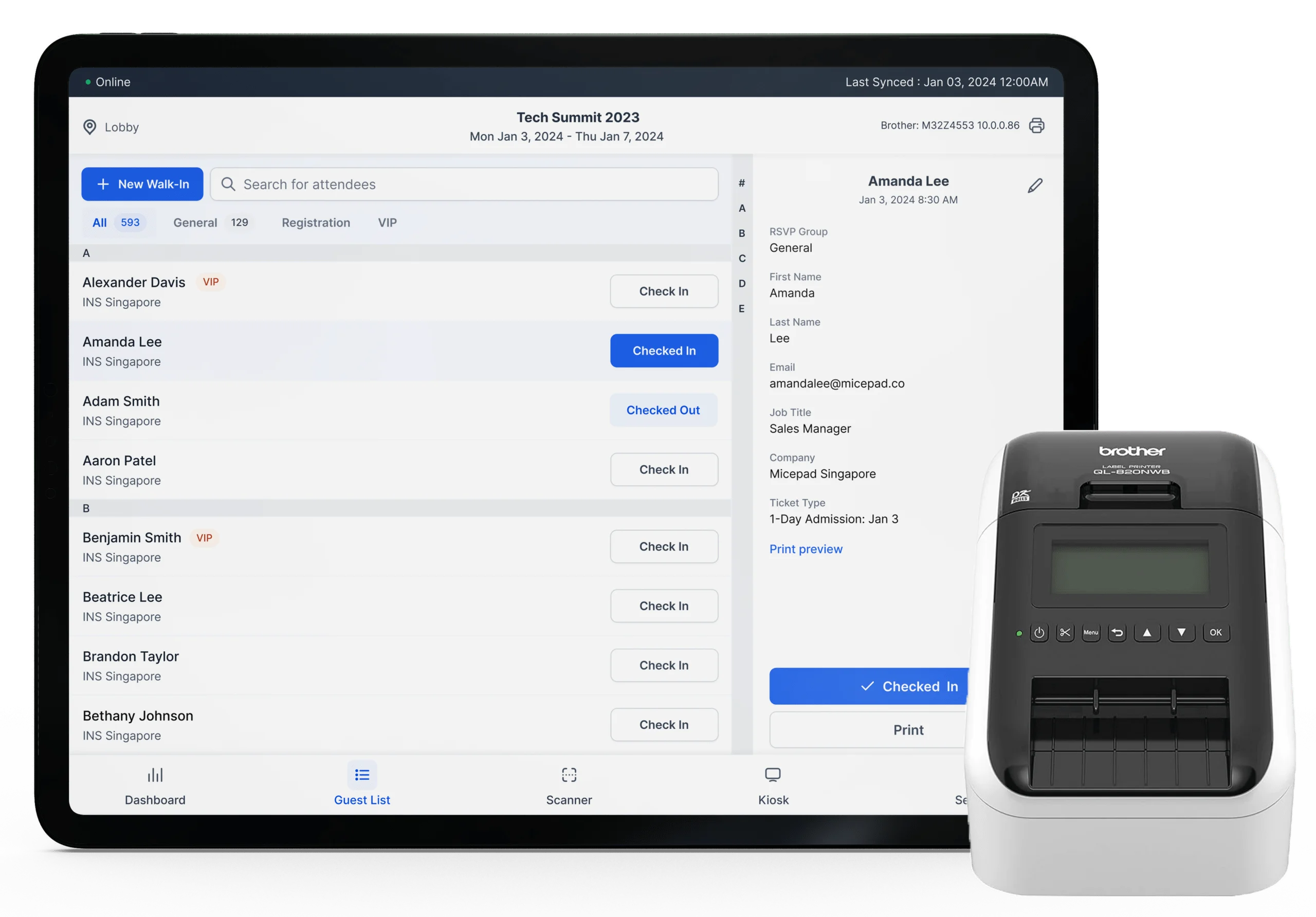
With this software, you can engage attendees better by offering personalized experiences like touchless registration and check-in process, tailored content recommendations, and networking opportunities. If you are an event planner, event management softwares can be your savvy tool to analyze attendee data post-event to improve future gatherings.
Using tools like Micepad, you’ll streamline tasks, communicate effortlessly with participants, and centralize all event logistics. This means less manual work and more precise coordination, ensuring your events are efficient and successful. Whether it’s optimizing guest experiences or refining event strategies, this software is your go-to for making every event a hit.
Benefits of Using Event Management Software
If you’re still wondering why your next event should incorporate event management software, here’s why:
1. Efficient Budget Planning
Regardless of the size of the event being managed, the budget is perhaps the most important part of managing events. Every event is characterized by certain specifics. Thus, having the right resources at hand and the ability to channel available resources determine the effectiveness of the event planning.
However, the process of costing, controlling expenses and budget planning is subject to various operational details. Using an online event management system allows you to automate several event management processes, thereby, helping you cut down on the cost management process.
These systems are equipped with features that automatically collates all your events transactions and details, runs through your expected income and expenditure and analyzes them for better cost optimization.
Another feature is the capability to track quotations and evaluate the costing procedure carefully and accurately.
2. Proficient Data Management
In most cases, the efficiency of the team members involved in organizing events is determined by their access and ability to analyze relevant information. Since event management is a data-driven enterprise, the availability of an automated system for data analysis and control drives better productivity.
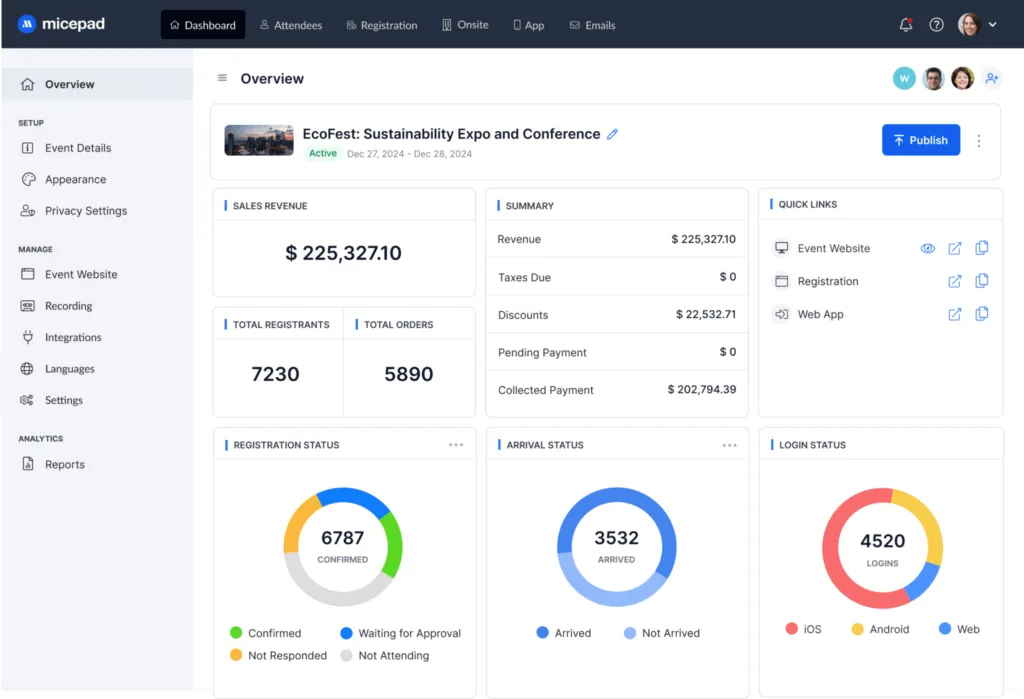
One of the event management software benefits, in this variation, includes a single-file or centralized database which ensures remote access to data for analysis. In effect, one of the most used technological products in event management is SaaS tools.
However, some of these systems are equipped to function with manual updates of data onto the system for analysis. Using the power wielded by automated, event management systems allows automatic data entry and processing – thus, helping to save SaaS team’s time and increasing efficiency in decision-making.
Running this system allows collation and processing of various forms of data like online registration and other logistics for further marketing. It also helps teams to get real-time updates on the progress of the projects at hand while reducing the time spent on creating multiple files by letting them give comments and recommendations on a single digital file.
3. Sophisticated and Better Event Marketing
Long-term marketing is one of the most vital factors in the success of your event. Event management systems allow for the promotion of events by soliciting leads for target audiences and extending to a wider audience base.
Event marketing tools are practically one of the most sophisticated event management software features that allow easy integration of content and delivery pages for the events while creating an interface for customer engagement.
These tools harness various marketing channels such as email marketing, social media, blog sites and other online communities for better potential clients’ engagement. Some systems are equipped with tools like an event web builder, event calendar and a mailer.
These tools allow optimal marketing by building application forms and landing pages for online registrations and information, then collating the necessary information from the registration pages for insights on the target audience’s behavior and, finally, using various marketing channels to promote the event.
Also, these tools give would-be participants access to various programs through click-through or open buttons on their marketing channel. They automate performance tracking methods by tracking real-time data that is relevant to the event.

4. Real-time and Post-event Analytics
Feedback and performance tracking plays an important role in event management. Most online event management systems are equipped with survey tools that allow you to gain sufficient insights on the clients’ satisfaction through the existing database of participants and post-event survey.
Through these tools, you get to conduct an analysis on the level of participation, engagement, no shows and location-based data. They help you gain the right information on the performance of your event and how well it could be improved.
5. Regulated Workflows
Visibility of the various work processes involved in the event planning allows you regulate your workflow for better results. These automated systems help you stay organized by automating various work process to allow you to cut down on cost and the time used on performing repetitive tasks.
Event marketing statistics show that the adoption of event technology can increase event attendance by 20% and productivity by 27%. Thus, with these systems in place, teams are able to multitask and streamline their work processes.
Already, statistics have further indicated that businesses that do use event software save an approximate 18.6 hours a month on event planning. This means that businesses get the advantage of lower overheads like optimal venue searches and better deals for cost-effectiveness with these software programs.
6. Arrivals and Payments Validation
Clients’ reception matters to your event. Hence, making the process of arrival registration and validation fast is important. Applying an automated event management system helps you to process participants’ details accurately, validate their presence with precision and stay organized.
These systems are designed to be interoperable with other tools. Hence, integrating them allows any internet-enabled devices to act as a self-service registration desk for guest arrivals. Also, applying this system to payments validation allows guest to complete their payment easily.
An event management system has the added advantage of ensuring that all details needed for the participants are efficiently provided. For instance, labels, receipts, payment invoices, events brochures, and badges are accurately printed out from the existing database.
7. Detailed and Multi-versioned Reporting
The ability to track trends and deliver well-detailed reports helps you make more informed decisions in the long run. Some event management solutions are equipped to help you to track down the necessary information needed for reporting.
Since reporting can take various forms and versions depending on the recipients of the reports, using these automated solutions allows you to build up the data adequate for the form of reporting required and create multiple versions of the reports.
Things You Should Look for in Event Management Softwares
When you’re picking out event management software, you want to make sure it checks all the right boxes. Here’s a rundown of the must-have features that’ll make your event a smashing success:
1. Tools for Attendee Interaction and Engagement
Creating an engaging experience is super important. You’ll want software that includes essential features like discussion forums, one-on-one chat, and video calls. These tools can really help recreate the buzz of a live event, helping everyone connect and interact in meaningful ways.
2. Personalized Registration and Ticketing Options
Every event is unique, so your registration and ticketing process should be too. Make sure to choose a registration platform that lets you customize registration forms and ticket options to suit your event perfectly. This flexibility will not only make your attendees happier but also streamline your planning process.
3. Event Marketing and Promotional Features
Promotion is key to filling those seats. Look for software that comes with a dedicated event site where you can post all the important details, along with features like push notifications and email marketing. These tools can help you spread the word far and wide, driving up those registration numbers.
4. User-Friendly Interface
Let’s face it, no one wants to struggle with complicated software. Go for a platform with a simple, intuitive interface that’s easy for both you and your attendees to navigate. Even if there’s a bit of a learning curve, a user-friendly design will save everyone a lot of headaches and make the whole process smoother.
5. Insights and Analytics for Informed Decisions
Data is your best friend when it comes to planning a successful event. Make sure your software provides detailed analytics and reporting tools. These insights can show you what’s working and what’s not, helping you make smart decisions and improve your event.
6. Mobile App Compatibility and Features
Everyone’s glued to their phones these days, so having a customizable mobile event app is a huge plus. Ensure your software offers robust mobile features, allowing attendees to access event info, engage with others, and stay updated on the go.
7. Flexible and Scalable Solutions
Whether you’re planning a cozy gathering or a massive conference, your event management software should be able to handle it. Look for flexibility that can accommodate different event sizes and types, ensuring the software can grow with your needs.
8. Robust Security and Compliance Standards
Keeping your attendees’ data safe is non-negotiable. Choose a platform that follows strict security protocols and compliance standards. This way, you can be sure all the information is handled securely and ethically.
9. Dedicated Customer Assistance
Reliable customer support can make all the difference when issues pop up. Go for software that offers 24/7 customer support so you’re never left hanging. Quick help means you can resolve problems fast and keep your event running smoothly.
Conclusion
When you’re choosing event management software, it’s important to find one that ticks all these boxes. By focusing on interaction, personalization, marketing, usability, data insights, mobile compatibility, scalability, security, and support, you’ll be well on your way to hosting a fantastic event. So dive in, explore your options, and pick the software that feels like the best fit for your needs.
Micepad can provide you with all these essential features and more, making it the perfect choice for your event management needs. Ready to see Micepad in action? Request a demo today!

See the app at a real event
Read how MongoDB used Micepad's app across 10 APAC cities — 15,000+ attendees.