Hong Kong MICE Industry in 2026: What Event Planners Need to Know
 Tom
5 min read
Tom
5 min read
Hong Kong's MICE industry has moved past recovery and into a different phase. The question for event planners in 2026 is no longer whether events are coming back. It is whether you are equipped for what events have become.
Where the industry stands
The Hong Kong Tourism Board reported that MICE visitor arrivals in 2025 exceeded pre-pandemic levels for the first time. HKCEC hosted over 1,200 events last year. AsiaWorld-Expo expanded its convention facilities. The city is firmly back on the circuit for major international conferences in finance, technology, legal, and property.
But the events coming back are not the same events that left.
Average event size has shifted. There are more mid-scale events in the 200 to 1,500 attendee range and fewer mega-conferences. Corporate clients, particularly in banking and professional services, are running more frequent, more targeted gatherings rather than annual flagship events. This changes the economics. Organisers need to deliver the same production quality at lower per-event budgets.
Government support is real
The Hong Kong government has invested heavily in positioning the city as a MICE destination. The Mega Events Fund, expanded in 2025, provides financial support for events that bring international visitors. The Convention and Exhibition Industry Subsidy Scheme offers direct subsidies for organisers using Hong Kong venues.
For planners, this means two things. First, there is genuine financial support available if your event qualifies. Second, competition for prime venue dates at HKCEC and Kerry Hotel has increased. Booking lead times have stretched from 6 months to 9 to 12 months for popular slots.
The government's bet is straightforward. MICE visitors spend significantly more per trip than leisure tourists. Every major conference brings delegates who book hotels, dine out, and extend stays. The infrastructure investment reflects that calculation.
Technology adoption has accelerated
This is the most significant shift for working event planners. Technology that was optional in 2019 is now expected.
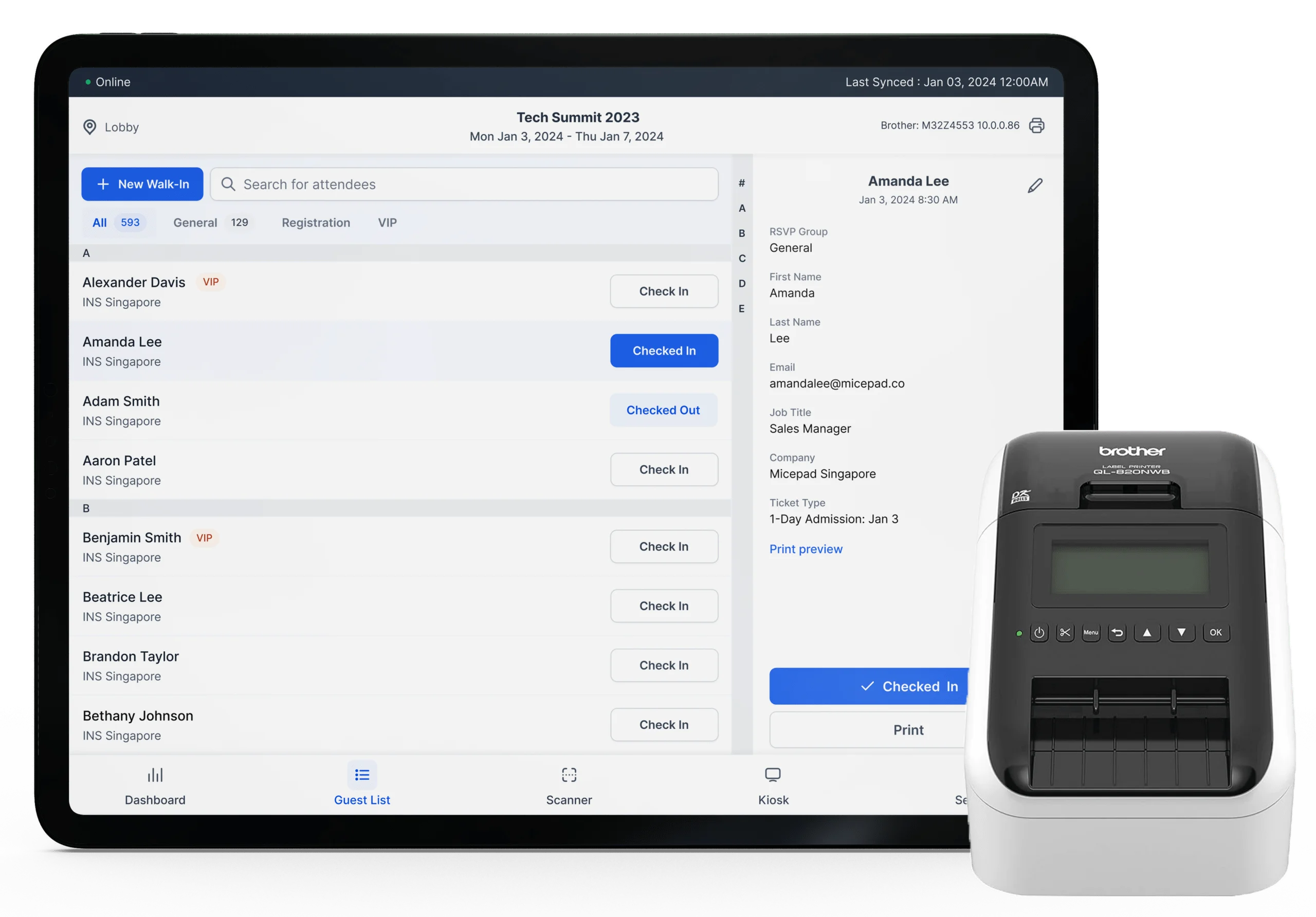
Self-service check-in is standard at any event above 200 attendees. Clients ask for it. Venues expect it. The manual registration desk with printed name lists is effectively gone from professional events in Hong Kong.
Real-time attendee data is now a deliverable, not a nice-to-have. Sponsors want to know session attendance numbers during the event, not in a report two weeks later. Exhibitors want lead capture integrated with their CRM on the same day.
Bilingual digital communications are baseline. Pre-event emails, registration confirmations, and on-site signage need to work seamlessly in English and Traditional Chinese. Any system that treats Chinese as an afterthought creates problems.
Contactless and mobile-first workflows have stuck from the pandemic era. QR code entry, digital agendas, and mobile networking tools are expected by Hong Kong attendees.
The agentic shift
The next evolution is already underway. Event platforms are moving from tools that organisers operate to systems that operate themselves.
Micepad's approach to this is what we call the agentic event platform. Instead of an organiser manually adjusting check-in stations, monitoring registration numbers, and reallocating resources during an event, AI agents handle these operational decisions in real time.
What does this look like in practice? During a conference at HKCEC, an AI agent monitors check-in throughput across all stations. If one station develops a queue while another is idle, it rebalances. If walk-in registrations are running higher than projected, it adjusts badge printing priorities. If a session is over capacity, it flags it and suggests overflow options before the organiser even notices.
This is not theoretical. It is running on Micepad's platform today. For Hong Kong event planners managing 10 to 20 events per year with small teams, having an AI agent handle the operational micro-decisions frees up human attention for the work that actually needs judgement: client relationships, speaker management, crisis handling.
What planners should prepare for
Based on what we are seeing across events in Hong Kong, Singapore, and Taiwan, here are the practical implications for 2026.
Budget for technology as a line item, not an afterthought. Event tech spend in Hong Kong typically runs HKD 15,000 to HKD 80,000 depending on event size and requirements. Clients increasingly expect this to be included in proposals, not presented as an add-on.
Plan for hybrid as a permanent option. Not every event needs a full hybrid setup. But having the capability to livestream a keynote or provide remote access to specific sessions is now a standard client request. Build it into your default offering.
Invest in data capability. The organisers winning repeat business in Hong Kong are the ones delivering post-event analytics that clients can act on. Attendance patterns, engagement scores, session popularity, networking activity. The data is there if your platform captures it.
Build vendor relationships early. With HKCEC and major hotels booking further in advance, the event planners who have established relationships with tech vendors, AV suppliers, and venue contacts are the ones securing preferred dates and rates.
The competitive landscape
Hong Kong's event planning market is competitive. Established agencies compete with hotel in-house teams, venue-affiliated planners, and a growing number of independent organisers.
The differentiator is increasingly operational capability. Can you run a 1,000-person conference with a team of four? Can you deliver real-time sponsor reports during the event? Can you handle a last-minute venue change without rebuilding your entire registration workflow?
The planners who can answer yes to these questions are the ones growing. The common thread is that they have invested in event technology that scales with them rather than requiring more headcount.
Micepad has supported events across Hong Kong for over a decade, working with organisers running everything from intimate boardroom briefings at the Four Seasons to multi-thousand-attendee conferences at HKCEC. The platform is built for the operational realities of Hong Kong events: bilingual, fast-paced, high-expectation, and increasingly AI-assisted.
The MICE industry in Hong Kong in 2026 is healthy and demanding. The opportunity is significant for planners who have the tools to match.
Running a 1,000+ attendee event?
Talk to the team behind MongoDB.local. 30-min consultation, no sales pitch.